
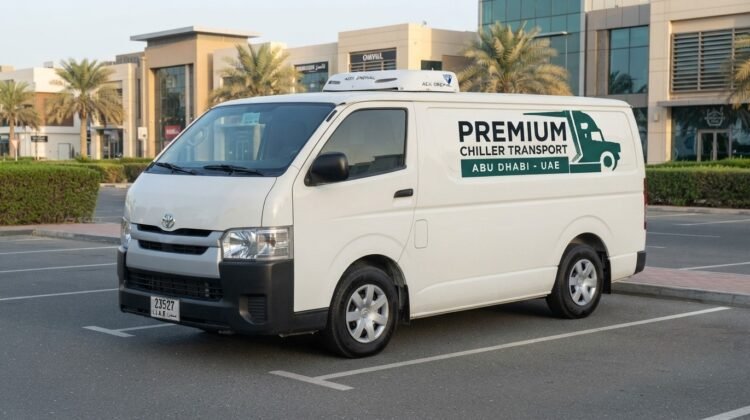
Refrigerated Transport Systems, Explained
What is a refrigerated transport systems
What the term actually covers, how a refrigeration unit holds temperature on the move, the main types of system in use across the UAE, and how to pick the right one for your load.
A refrigerated transport system is any vehicle, unit, or piece of equipment built to move goods at a controlled temperature, keeping fresh produce, dairy, flowers, pharmaceuticals, or frozen stock at the same condition they left in, no matter how hot it gets outside. The term covers everything from a single chiller van to a full reefer container on a ship, but in day-to-day UAE logistics it usually means one thing: a van, truck, or trailer with its own refrigeration unit, insulated body, and the controls to hold a set temperature band from pickup to delivery.
The system has three parts working together: an insulated body that slows heat transfer, a refrigeration unit (the compressor and evaporator that actively pull heat out), and a way to monitor and control the temperature, from a simple dial to live remote tracking. Weaken any one part: poor insulation, an undersized unit, doors left open too long, and the whole system underperforms, whatever the goods inside.
How refrigerated transport systems hold temperature
Most road-going systems use a mechanical refrigeration unit mounted on the vehicle: a diesel- or engine-driven compressor circulates refrigerant through an evaporator inside the cargo box, pulling heat out of the air and holding it at a set point. It’s the same principle as a household fridge, scaled up and hardened to run for hours in ambient temperatures well above 40°C. A smaller number of specialist systems use cryogenic cooling (liquid nitrogen or CO₂) for ultra-low or backup cooling, but for everyday chiller and freezer van work in the UAE, mechanical units are the standard.
Two details decide whether the system actually performs on the road rather than just on paper. The first is pre-cooling, pulling the cargo box down to temperature before loading, so goods go into a cold hold rather than a warm one still trying to catch up. The second is door discipline on multi-drop routes: every time the doors open in 45°C heat, warm air floods in, and the unit has to work to recover. A well-run system minimises both cold before loading and fast in and out at every stop.
The detail people miss
A refrigeration unit cools air, not cargo directly. A warm load placed in a cold van can take hours to reach the right temperature on its own which is why goods should already be at the right temperature before they’re loaded, not relying on the van to bring them down in transit.
The main types of refrigerated transport systems
“Refrigerated transport system” is an umbrella term. In practice, businesses moving goods around the UAE are usually choosing between a handful of vehicle types, each suited to a different load size and route.
Chiller vans
Hold a steady 0–8°C for fresh food, dairy, flowers, and most pharma. The workhorse of last-mile and multi-drop cold delivery.
Freezer vans
Run down to around −18°C for goods that must stay frozen solid ice cream, frozen meat and seafood, and frozen-ready meals.
Multi-temp vans
Split into two or more independently controlled zones, so chilled and frozen goods travel on the same route without either compromising.
Refrigerated trucks
Larger insulated bodies on truck chassis for pallet loads and bulk distribution runs between hubs, stores, and depots.
Reefer containers
Standalone refrigerated shipping ccontainers are used for sea and long-haul freight outside most last-mile rental needs, but part of the same cold chain.
Monitored systems
Any of the above with live temperature logging added the layer that turns “it should have stayed cold” into proof that it did.
| System type | Typical range | Best for |
|---|---|---|
| Chiller van | 0–8 °C | Fresh produce, dairy, flowers, pharma, restaurant supply |
| Freezer van | −18 °C | Ice cream, frozen meat & seafood, frozen ready meals |
| Multi-temp van | Two zones, set independently | Mixed chilled + frozen loads on one route |
| Refrigerated truck | 0–8 °C or −18 °C | Pallet and bulk loads, hub-to-store distribution |
How to choose the right system
Three questions settle most of the decision. First, what temperature does the product need? Fresh goods want 0–8°C; frozen goods want around −18°C; mixing the two on one route means a multi-temp system, not two separate vans if you can help it. Second, how much volume, and in what unit size? A 1-ton van suits last-mile drops; a 5-ton van or a refrigerated truck suits bulk distribution. Third, how many stops, and how long is the route? More stops mean more door-open time and a bigger case for a higher-capacity unit and disciplined loading, especially in UAE summer.
- Match the temperature band to the product; don’t chill what should be frozen, or freeze what should stay fresh
- Size the van or truck to the load, not the other way round
- Insist on pre-cooling before every handover, not cooling in transit
- Add temperature monitoring if a client, auditor or pharma protocol needs proof the cold held
- Check servicing and replacement-vehicle terms a fridge unit that fails mid-route is the real risk, not the vehicle itself
Not sure which system fits your load?
Tell us what you’re moving, the volume and the route, and we’ll match the right chiller van, freezer van or refrigerated truck — pre-cooled, with or without a driver.
Refrigerated transport systems in the UAE
Ambient temperatures above 45 °C in summer make the UAE one of the toughest environments anywhere for a refrigerated transport system to perform in. A unit that’s marginal in a milder climate simply won’t hold in a Dubai or Abu Dhabi afternoon — which is why pre-cooling, servicing discipline and route planning matter more here than almost anywhere else. Most operators rent rather than buy, since renting shifts the maintenance and downtime risk onto the provider and lets the vehicle scale with demand a single day for a peak, a month for a season, or a long-term contract for a dedicated fleet.
Whatever the scale, the system only works end to end if every link holds: pre-cooled before loading, disciplined at every stop, serviced on schedule, and where it matters proven with monitoring data. That’s the standard we build every rental around.
Refrigerated transport systems, answered
What is a refrigerated transport system?
Any vehicle or unit built to move goods at a controlled temperature typically an insulated van, truck or trailer fitted with a mechanical refrigeration unit, used to keep fresh or frozen goods at a steady temperature from pickup to delivery.What’s the difference between a chiller and a freezer system?
What’s the difference between a chiller and a freezer system?
A chiller system holds 0–8 °C for fresh goods; a freezer system holds around −18 °C for frozen goods. A multi-temp system runs both zones independently on one vehicle.How do refrigerated transport systems work in extreme heat?
How do refrigerated transport systems work in extreme heat?
They rely on a properly sized mechanical unit, good insulation, and operational discipline — pre-cooling before loading and minimising door-open time to hold temperature even when ambient conditions are above 45 °C, as they routinely are in the UAE summer.Should I buy or rent a refrigerated transport system?
Should I buy or rent a refrigerated transport system?
Most UAE businesses rent, since it shifts servicing, downtime and depreciation risk onto the provider and lets the vehicle scale with demand a day, a month, or a long-term dedicated fleet.Do you supply refrigerated transport systems in the UAE?
Do you supply refrigerated transport systems in the UAE?
Yes, we rent pre-cooled chiller vans, freezer vans, multi-temp vans and refrigerated trucks across all seven emirates, daily to long-term, with or without a driver.