
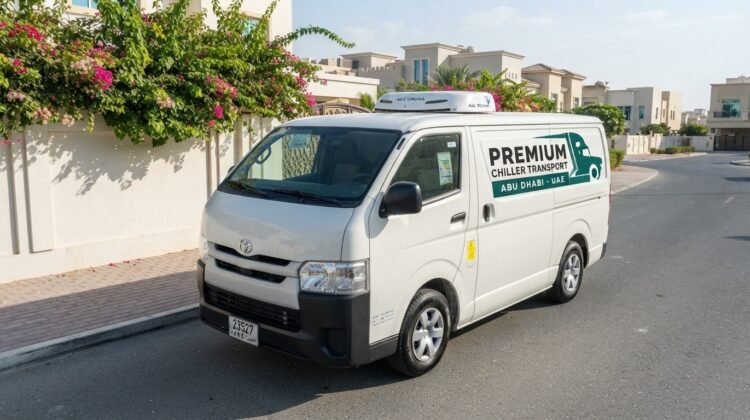
Temperature controlled transport
Temperature-controlled transport: the complete UAE guide
Everything that sits under the phrase “temperature controlled transport”: the vehicles, the brands, the monitoring, and what actually separates a good provider from a risky one.
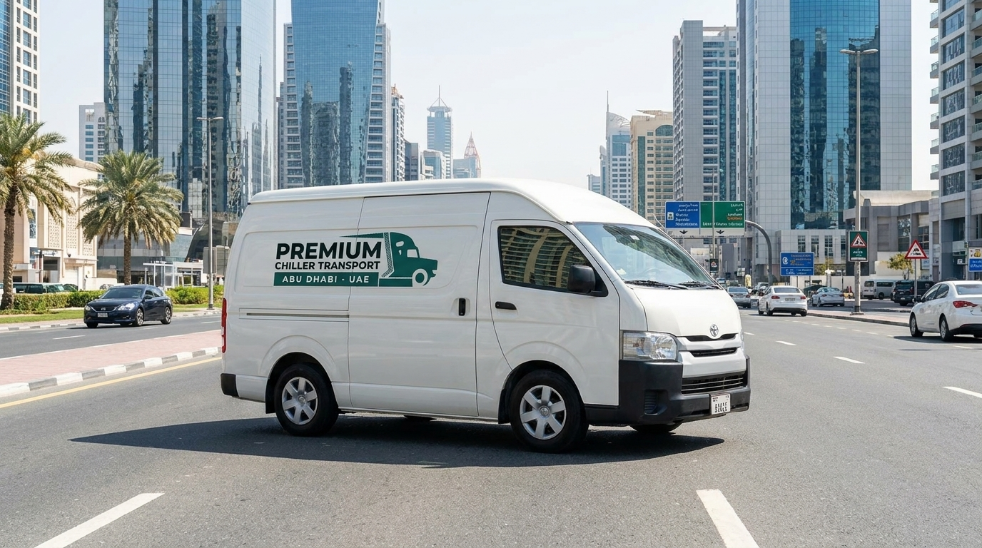
Table of Contents
“Temperature-controlled transport” is the umbrella term for any delivery where the cargo has to stay inside a set temperature range — chilled, frozen, or a precise medical band from pickup to drop-off. It’s the same discipline whether you’re moving a pallet of yoghurt or a box of vaccines; only the numbers and the paperwork change.
This guide brings everything together: the bands, the vehicles, how you prove the cold held, and the things that quietly go wrong. If you’re new to it, start here; if you already run cold routes, this guide is a useful sanity check against how you’re doing it now.
What temperature-controlled transport means
At its simplest, it’s transport where the vehicle actively maintains a target temperature rather than just insulating against the outside. That “actively” is the key word an insulated box slows heat gain; a refrigerated vehicle fights it, holding a set point even when the air outside is 45 °C. In the UAE, that distinction is crucial, because passive insulation alone fails to keep the heat out within a couple of hours in summer.
The temperature bands
Most loads fall into one of three bands. Knowing yours is the first decision, because it dictates the vehicle:
| Band | Range | Typical goods |
|---|---|---|
| Chilled | 0–8 °C | Produce, dairy, fresh meat/fish, flowers, prepared food |
| Frozen | around −18 °C | Ice cream, frozen meat, frozen meals |
| Pharma | 2–8 °C (often tighter) | Medicines, vaccines, biological samples |
The pharma band overlaps with chilled but is far less forgiving a two-degree excursion can matter, and it must be documented. That’s a specialist world of its own, covered in pharma cold transport.
Vehicle types explained
Temperature-controlled vehicles vary along two axes: temperature (chiller vs freezer) and size (van vs truck).
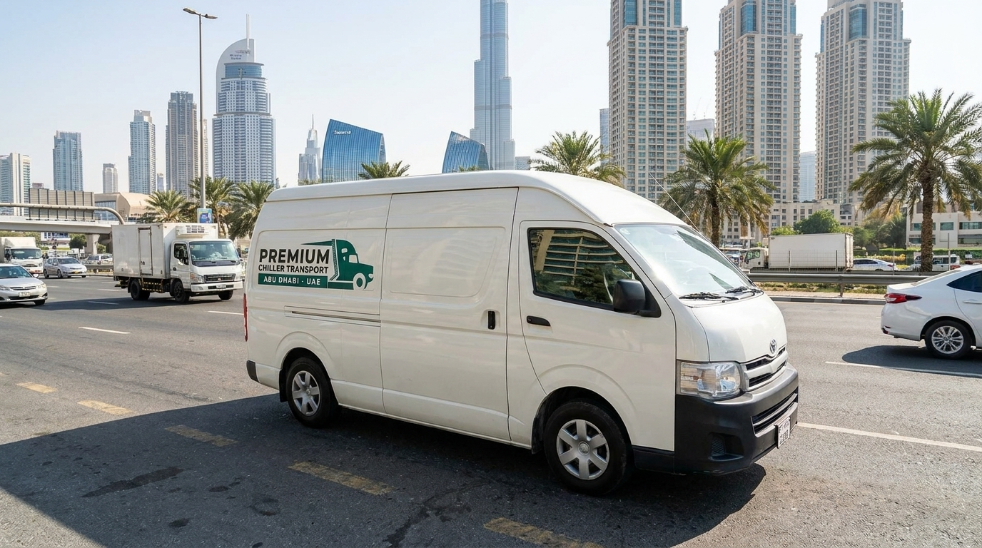
- Chiller vans: 0–8 °C, city and last-mile fresh loads. The everyday workhorse.
- Freezer vans: −18 °C, frozen goods on smaller routes.
- Refrigerated (reefer) trucks: pallet and bulk loads, chiller or freezer, built for inter-emirate distance. See refrigerated truck rental.
- Multi-temperature vehicles: partitioned into separate chilled and frozen zones for mixed loads on one route.
Two quick decisions get you to the right vehicle: chiller or freezer (see chiller vs. freezer van), then van or truck (see truck vs van).
Monitoring and proof
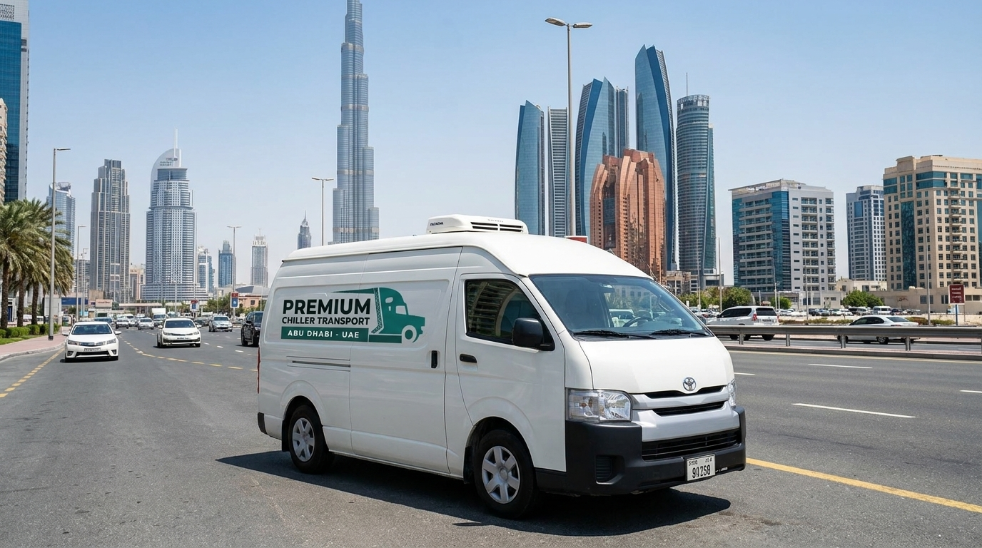
Holding the temperature is one thing; proving you held it is another, and increasingly it’s the part that wins or loses contracts. Temperature monitoring ranges from a simple in-cab readout to live GPS-linked loggers that record the cargo temperature continuously and flag any excursion.
When monitoring stops being optional
If you supply supermarkets, hospitals, pharma distributors, or any audited buyer, they will often ask for the temperature record as a condition of doing business. A load that arrived cold but has no data trail can still fail an audit. For those routes, live monitoring isn’t an add-on; it’s the deliverable.
The mistakes that cost loads
The failures repeat across every sector we serve:
- Not pre-cooling the vehicle. Loading into a warm hold means starting the journey already behind.
- Careless door discipline. Multi-drop routes bleed cold at every open door in the sun.
- Wrong band for the load. Freezing fresh goods or under-cooling frozen ones.
- Gaps at the ends. Goods are baked on an unshaded bay before pickup or sitting warm after delivery.
- No proof. Great handling, no record, and no way to defend it if a buyer queries a load.
How to choose a provider
When you’re handing your cold chain to someone else, the questions worth asking are practical, not glossy:
- Do they pre-cool every vehicle before handover as standard?
- Is the fleet owned and serviced, or brokered out to whoever’s free?
- Can they provide temperature monitoring and a record when you need it?
- Do they know your routes and receiving points the market runs, the overnight restocks, and the inter-emirate crossings?
- Is there uptime coverage for a replacement vehicle if one goes down so a breakdown isn’t your problem?
- Are they available around the clock, given how much cold work here happens overnight and pre-dawn?
Get “yes” to those, and the rest tends to follow. The whole point of temperature-controlled transport is that the customer never thinks about it; the goods just arrive right.
The whole guide in five lines
- It’s transport that actively holds a set temperature, not just insulates essentials in UAE heat.
- Know your band first: chilled (0–8 °C), frozen (−18 °C), or pharma (2–8 °C).
- Pick the vehicle by temperature and size: chiller/freezer, van/truck, or multi-temp.
- Monitoring turns “we kept it cold” into proof, often a contract requirement.
- Choose a provider who pre-cools, owns their fleet, covers uptime, and knows the routes.
Related services & guides
The vehicles and services behind temperature-controlled transport.
- Refrigerated van hubChiller & freezer vans
- Refrigerated trucksPallets & bulk
- Cold chain logisticsEnd-to-end service
- Pharma cold transport2–8 °C, GDP-aligned
- Chiller vs freezerPick the band
- Truck vs vanPick the size
Need temperature-controlled transport you can trust?
Owned, pre-cooled, monitored vehicles across all seven emirates — chilled, frozen or pharma-grade, with uptime cover built in.
FAQ About Temperature-controlled transport
Q: What is temperature-controlled transport?
It’s transport where the vehicle actively maintains a set temperature — chilled, frozen or a precise pharma band — from pickup to delivery, rather than just insulating against the outside. In UAE heat, active refrigeration is essential.What temperatures are used in temperature-controlled transport?Do I need temperature monitoring?How do I choose a temperature-controlled transport provider?
Q: What temperatures are used in temperature-controlled transport?
Three main bands: chilled at 0–8 °C for fresh food and flowers, frozen at around −18 °C, and pharma at 2–8 °C (sometimes tighter) for medicines and vaccines.
Q: Do I need temperature monitoring?
If you supply supermarkets, hospitals, pharma distributors or any audited buyer, yes — they often require a temperature record as proof the cold chain held. A load that arrived cold but has no data trail can still fail an audit.
Q: How do I choose a temperature-controlled transport provider?
Check that they pre-cool every vehicle, own and service their own fleet, can supply temperature monitoring, know your routes, cover uptime with replacement vehicles, and operate around the clock.