
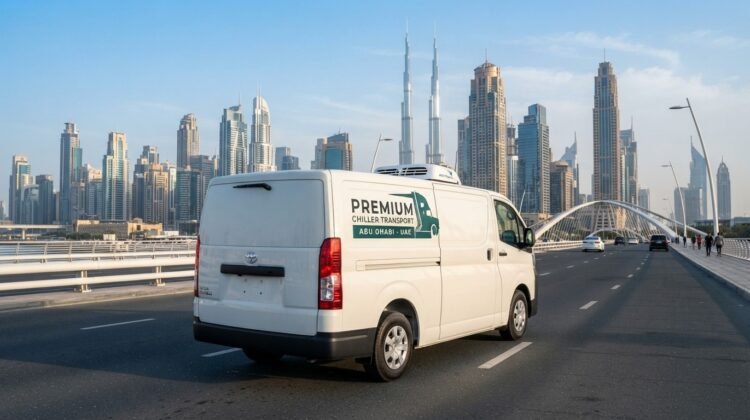
transport frozen food safely
Frozen transport
How to transport frozen food safely in the UAE
Frozen food is unforgiving: once it starts to thaw in the heat, you usually can’t re-freeze it or legally resell it. Here’s how to move it and keep it solid.
By the YourBrand Operations Team·Reviewed by [Ops lead / name + role]·Abu Dhabi·8 min read·Updated Aug 2026In this guide
- The temperature frozen food needs
- Pre-cool everything first
- Packing for the journey
- Choosing the right vehicle
- Handling on the road
- The rules and the record
Frozen food punishes mistakes faster than almost anything else you can put in a vehicle. Chilled produce that warms up a few degrees loses shelf life; frozen stock that thaws even partway is often a total write-off — unsafe to re-freeze, illegal to resell, and gone. In a 45 °C summer, the margin for error is measured in minutes.
The good news is that transporting frozen food well is mostly discipline, not wizardry. Get six things right — temperature, pre-cooling, packing, vehicle, handling and the paperwork — and your ice cream, meat or frozen meals arrive exactly as they left.
The temperature frozen food needs
The working standard for frozen food is −18 °C or colder, held steadily throughout the journey. That figure isn’t arbitrary: at −18 °C the water in food is locked solid and microbial activity is effectively halted. Let the temperature drift up towards −8 °C or higher and ice crystals begin to change, texture degrades, and — once you cross into thawing — the safety clock starts.
The critical rule: you cannot safely re-freeze food that has thawed. Refreezing may hide the evidence, but it doesn’t undo the bacterial growth or the quality loss. If a frozen load warms up in transit, the correct answer is almost never “put it back in the freezer.” That’s why prevention matters so much more here than recovery.
Pre-cool everything first
This is the single most common failure we see, and it costs people loads every summer. A freezer van that has been sitting closed in the sun can be well above freezing inside. Load frozen stock into that warm box and the unit spends the first stretch of the journey trying to pull the whole hold down — while your product sits in air that’s far too warm.
Why we hand vans over pre-cooled
A refrigeration unit chills the air; it doesn’t instantly chill a warm cargo hold or warm boxes. Bring the empty vehicle down to −18 °C before the product goes in, load fast, and you’re starting from cold instead of playing catch-up in the heat. Every van we send out is pre-cooled for exactly this reason.
Packing for the journey
Good packing buys you a buffer if anything goes wrong. A few principles:
- Keep it dense and stacked. A full, tightly packed load holds temperature far better than a half-empty one — frozen mass acts as its own thermal ballast. Loose, scattered boxes warm faster.
- Insulate and add cold packs for short or last-mile runs. Insulated boxes with gel packs or dry ice extend the safe window for smaller drops, especially the moments between vehicle and door.
- Leave airflow paths. Cold air needs to circulate around the load; don’t block the unit’s outlet or seal the load into a solid wall against it.
- Load last-out-first. Plan the stacking order to match your drop sequence so you’re not digging through the whole load at every stop.
Choosing the right vehicle
The vehicle has to actively hold −18 °C, not just be insulated. An icebox or an ordinary chiller won’t do it. Match the vehicle to the job:
- Small drops and city runs — a freezer van sized for last-mile work.
- Bulk and pallets or inter-emirate hauls — a freezer truck that holds −18 °C across long distances.
- Mixed frozen and chilled on one route — a multi-temperature vehicle with a partitioned frozen zone, so you’re not compromising one load for the other.
Ice cream and frozen desserts are their own discipline — they soften embarrassingly fast — which is why dedicated ice cream and frozen delivery vans exist.
Handling on the road
Even a perfect vehicle loses the plot if the doors are treated carelessly. The heat outside is trying to get in at every stop.
- Minimise door-open time. Know what you’re grabbing before you open. In direct sun, cold pours out of an open door in seconds.
- Don’t break the route. Long unplanned stops — a lunch break with the unit off, an errand — are where frozen loads quietly fail.
- Watch the readout. If the vehicle has a temperature display or logger, glance at it. A unit that’s drifting is telling you something early.
The rules and the record
Transporting frozen food commercially in the UAE isn’t just good practice — it’s regulated. Authorities such as Dubai Municipality set requirements for temperature-controlled food transport, and inspections do happen. If you supply supermarkets, hotels or any audited buyer, you may also be expected to prove the cold held — which is where temperature monitoring and a data record earn their keep. We cover the wider rulebook in our guide to Dubai Municipality food transport rules.
Frozen transport, boiled down
- Hold −18 °C or colder the whole way — and never re-freeze anything that thawed.
- Pre-cool the vehicle before loading; it’s the mistake that costs the most loads.
- Pack dense, insulate small drops, and load in drop order.
- Use a proper freezer van or truck, keep doors shut, and keep a temperature record if you’re audited.
Where to next.
Related services & guides
Vehicles and guides for moving frozen loads.
Freezer van rentalDown to −18 °C
Freezer truck rentalBulk & inter-emirate frozen
Ice cream & frozen vansDessert delivery, kept solid
Chiller vs freezer vanPick the right band
Food transport rulesWhat the law requires
Emergency transportWhen a freezer fails
Moving frozen food across the UAE?
Pre-cooled freezer vans and trucks that hold −18 °C from your store to the door — daily, monthly or on contract.
FAQ
Transporting frozen food — FAQ
What temperature should frozen food be transported at?
−18 °C or colder, held steadily for the whole journey. Above roughly −8 °C quality degrades, and once food begins to thaw it should not be re-frozen.Can you re-freeze frozen food that thawed in transit?Why does a freezer van need to be pre-cooled?What vehicle do I need to transport frozen food in the UAE?
Can you re-freeze frozen food that thawed in transit?
No. Food that has thawed should not be re-frozen — refreezing doesn’t reverse the bacterial growth or quality loss, and it may no longer be safe or legal to sell.
Why does a freezer van need to be pre-cooled?
A refrigeration unit cools air, not a warm cargo hold. Loading frozen stock into a warm van means the unit plays catch-up in the heat while your product warms — so the van should be brought to −18 °C before loading.
What vehicle do I need to transport frozen food in the UAE?
A freezer van for small and last-mile drops, or a freezer truck for pallets and inter-emirate hauls — both actively holding −18 °C. For mixed frozen and chilled loads, use a multi-temperature vehicle with separate zones.
YourBrand
Refrigerated van & truck rental across the UAE. Headquartered in Abu Dhabi, keeping the cold chain moving 24/7.
Vehicles
Mussafah, Abu Dhabi, UAEGet a quote
© 2026 YourBrand · Reviewed by Operations, Abu Dhabi · Updated Aug 2026Schema: Article · FAQPage · BreadcrumbList